某院降低辅助用药药占比的管控实践

第1页 / 共17页

第2页 / 共17页
第3页 / 共17页
第4页 / 共17页
第5页 / 共17页
第6页 / 共17页
第7页 / 共17页
试读已结束,还剩10页,您可下载完整版后进行离线阅读
某院降低辅助用药药占比的管控实践-知知文库网
某院降低辅助用药药占比的管控实践
此内容为付费资源,请付费后查看
1020
立即购买
您当前未登录!建议登陆后购买,可保存购买订单
付费资源
© 版权声明
THE END
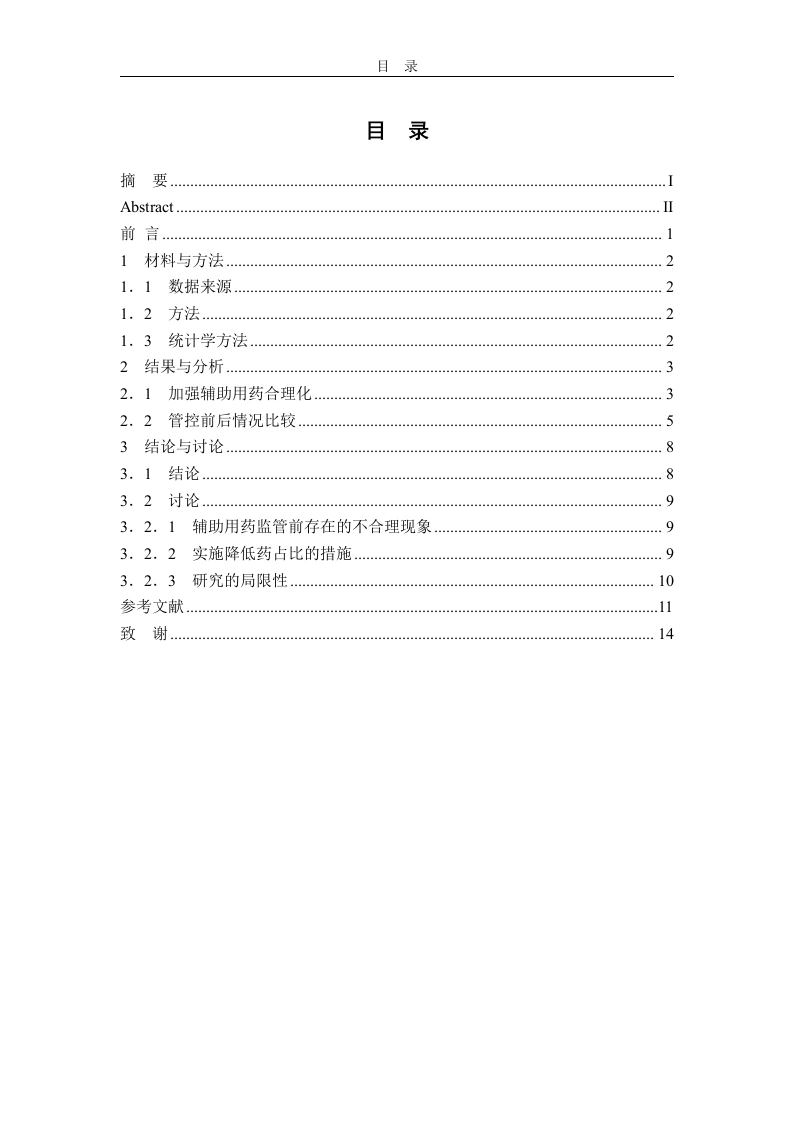
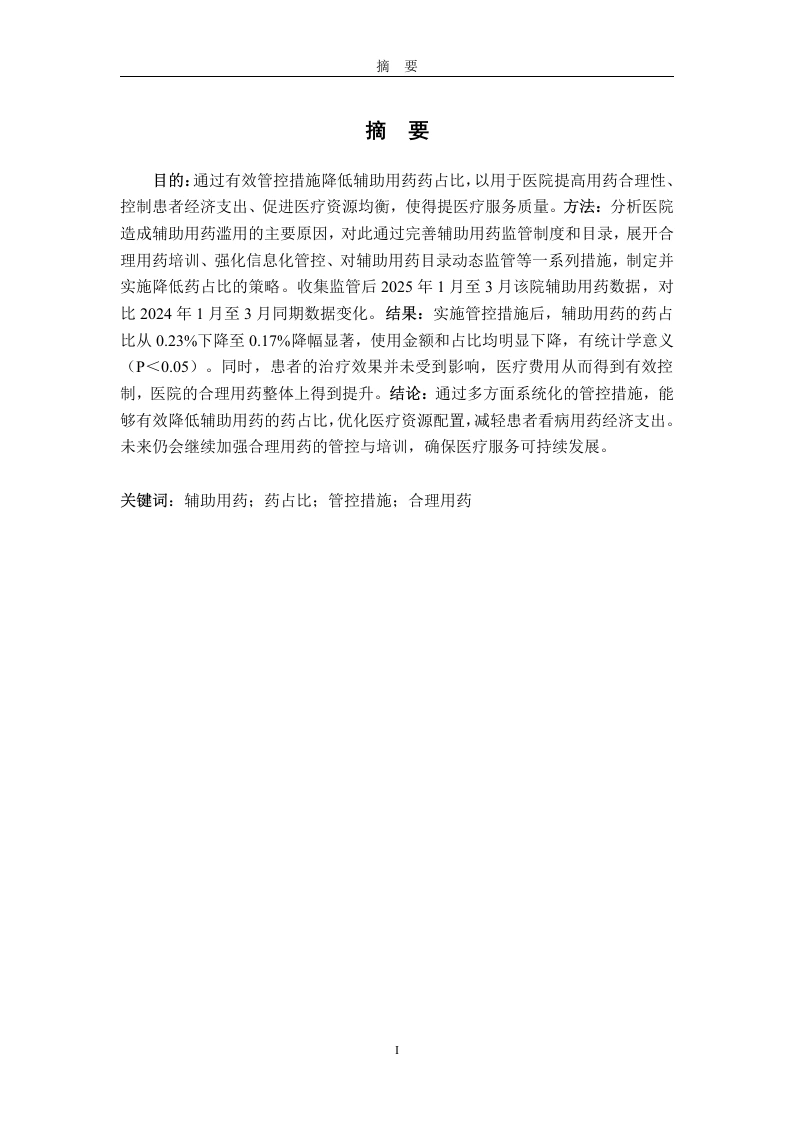
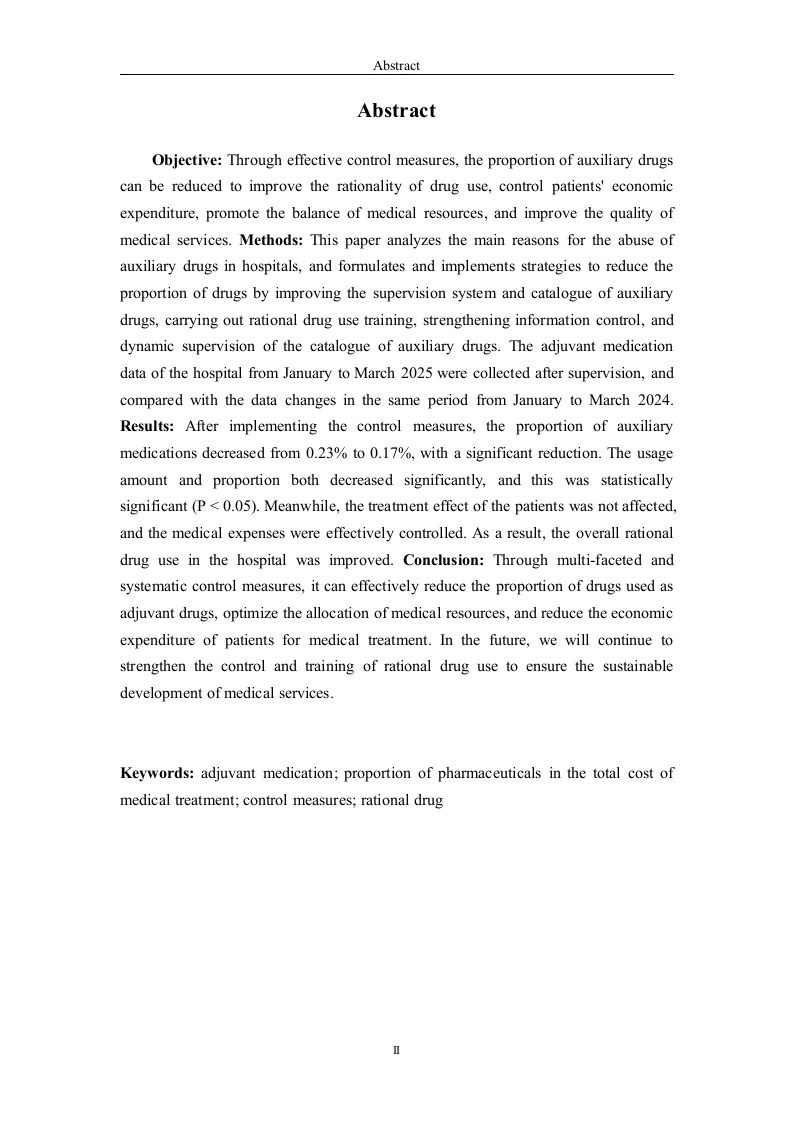
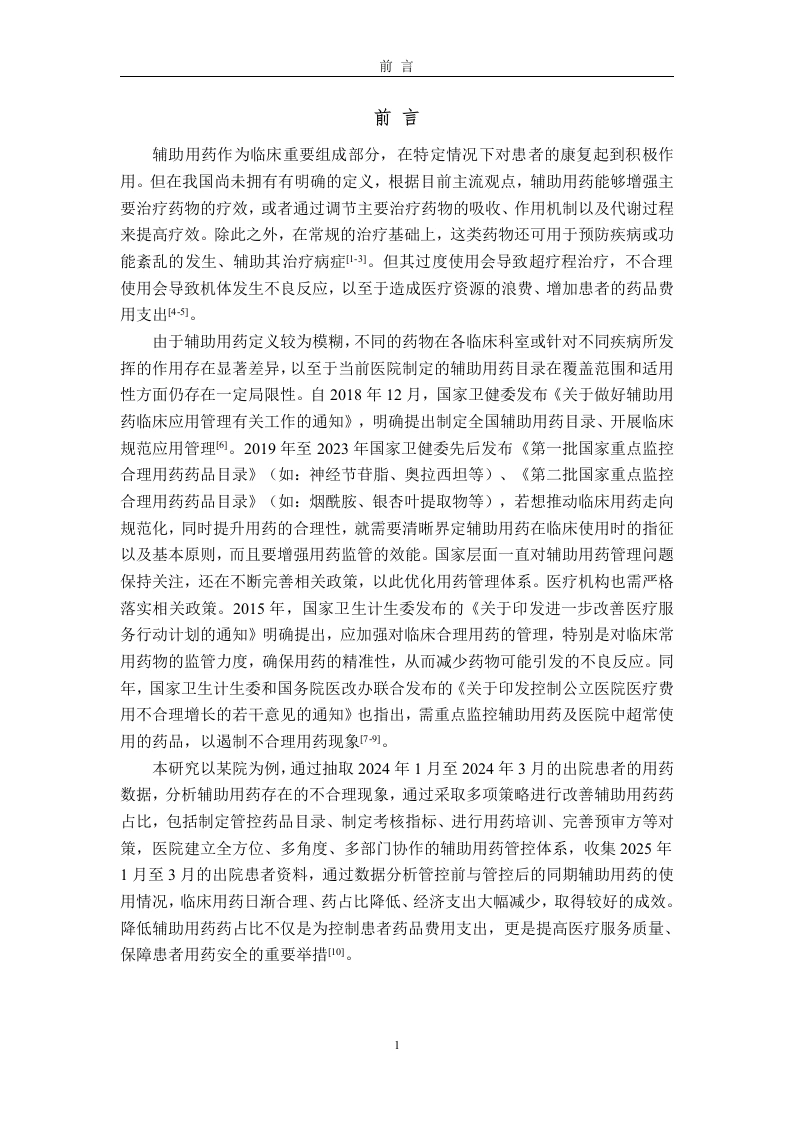
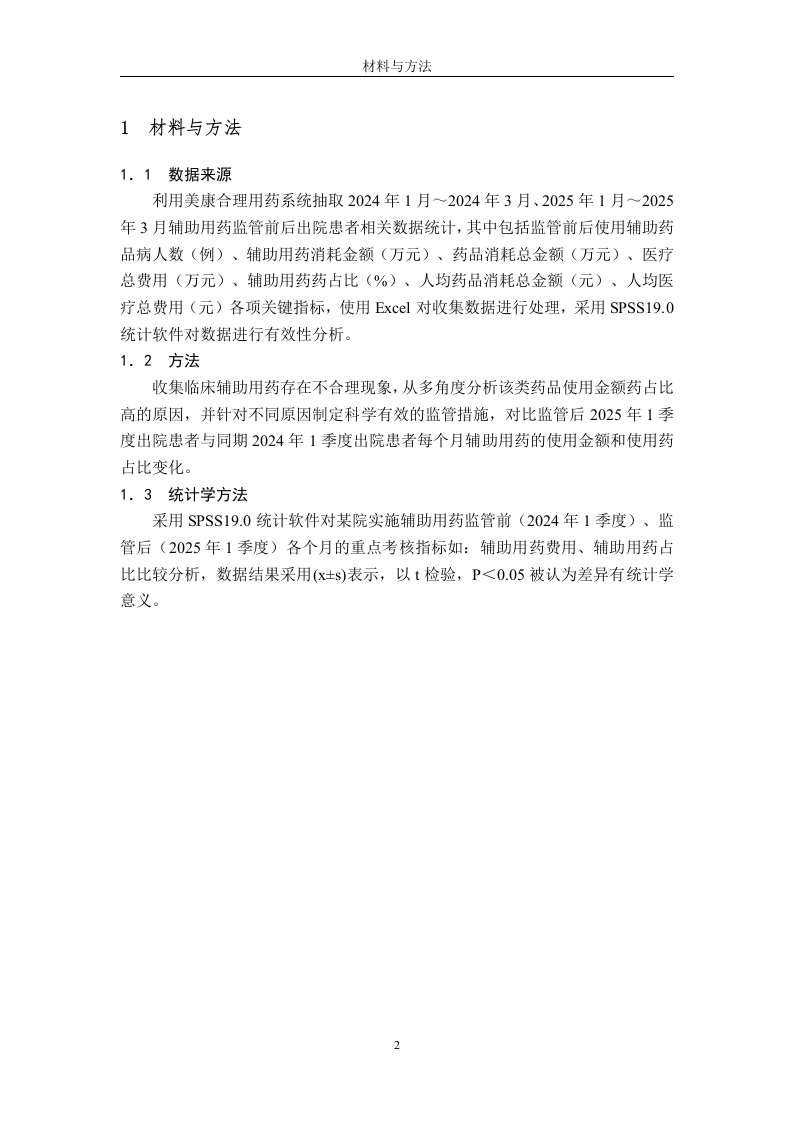
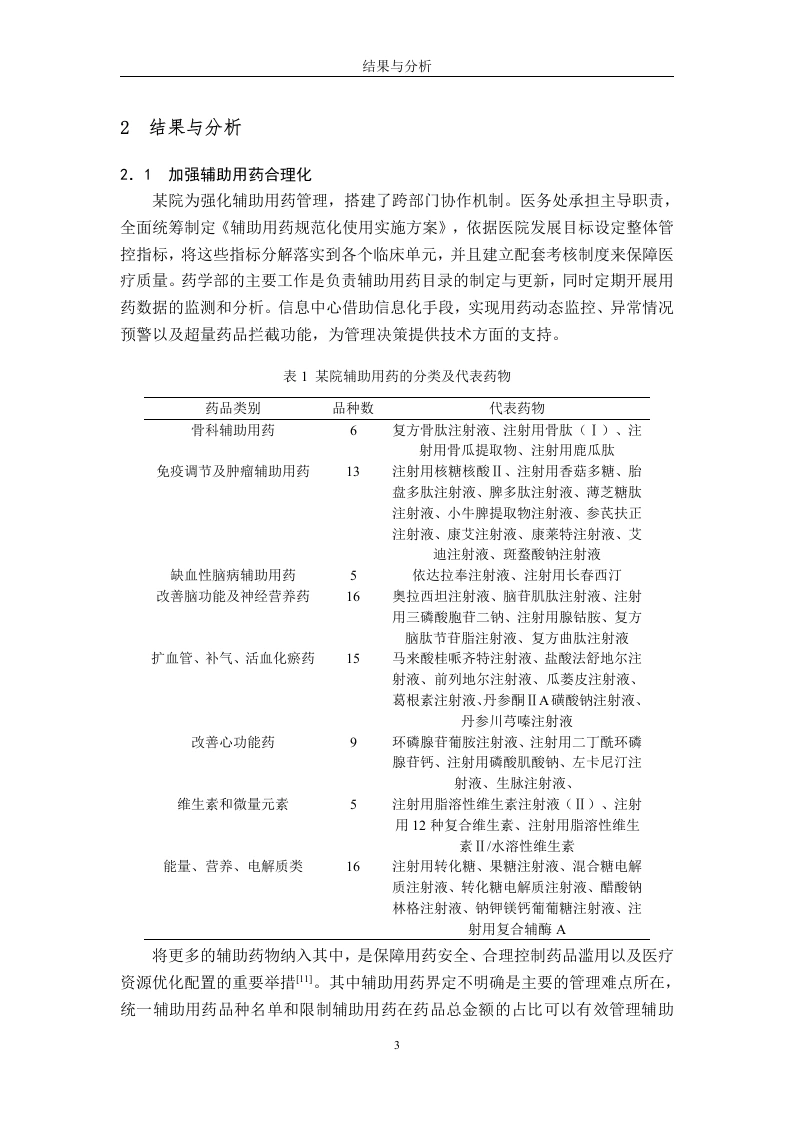
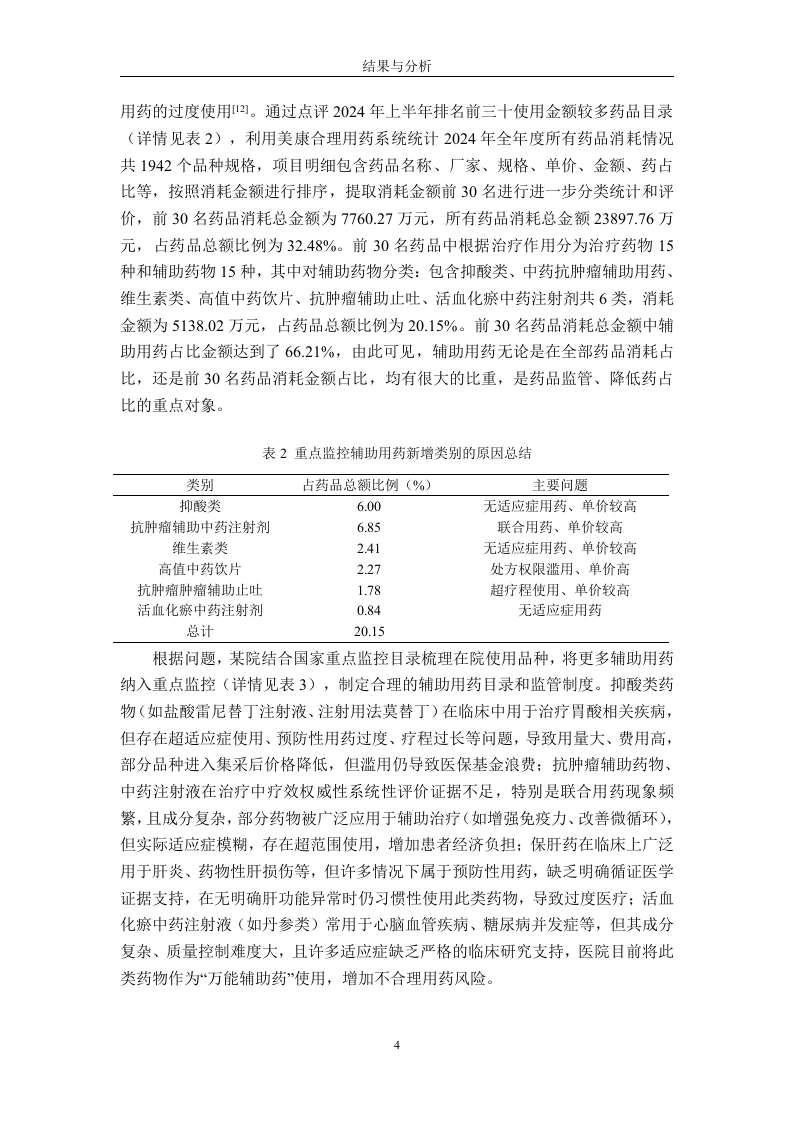
目录目录摘要..IAbstract…Ⅱa前言.44]1材料与方法21.1数据来源21.2方法…,21.3统计学方法22结果与分析.32.1加强辅助用药合理化32.2管控前后情况比较.53结论与讨论…83.1结论83.2讨论…3.2.1辅助用药监管前存在的不合理现象93.2.2实施降低药占比的措施.93.2.3研究的局限性.10参考文献致谢....14摘要摘要目的:通过有效管控措施降低辅助用药药占比,以用于医院提高用药合理性、控制患者经济支出、促进医疗资源均衡,使得提医疗服务质量。方法:分析医院造成辅助用药滥用的主要原因,对此通过完善辅助用药监管制度和目录,展开合理用药培训、强化信息化管控、对辅助用药目录动态监管等一系列措施,制定并实施降低药占比的策略。收集监管后2025年1月至3月该院辅助用药数据,对比2024年1月至3月同期数据变化。结果:实施管控措施后,辅助用药的药占比从0.23%下降至0.17%降幅显著,使用金额和占比均明显下降,有统计学意义(P<0.05)。同时,患者的治疗效果并未受到影响,医疗费用从而得到有效控制,医院的合理用药整体上得到提升。结论:通过多方面系统化的管控措施,能够有效降低辅助用药的药占比,优化医疗资源配置,减轻患者看病用药经济支出。未来仍会继续加强合理用药的管控与培训,确保医疗服务可持续发展。关键词:辅助用药;药占比;管控措施;合理用药AbstractAbstractObjective:Through effective control measures,the proportion of auxiliary drugscan be reduced to improve the rationality of drug use,control patients'economicexpenditure,promote the balance of medical resources,and improve the quality ofmedical services.Methods:This paper analyzes the main reasons for the abuse ofauxiliary drugs in hospitals,and formulates and implements strategies to reduce theproportion of drugs by improving the supervision system and catalogue of auxiliarydrugs,carrying out rational drug use training,strengthening information control,anddynamic supervision of the catalogue of auxiliary drugs.The adjuvant medicationdata of the hospital from January to March 2025 were collected after supervision,andcompared with the data changes in the same period from January to March 2024.Results:After implementing the control measures,the proportion of auxiliarymedications decreased from 0.23%to 0.17%,with a significant reduction.The usageamount and proportion both decreased significantly,and this was statisticallysignificant(P<0.05).Meanwhile,the treatment effect of the patients was not affected,and the medical expenses were effectively controlled.As a result,the overall rationaldrug use in the hospital was improved.Conclusion:Through multi-faceted andsystematic control measures,it can effectively reduce the proportion of drugs used asadjuvant drugs,optimize the allocation of medical resources,and reduce the economicexpenditure of patients for medical treatment.In the future,we will continue tostrengthen the control and training of rational drug use to ensure the sustainabledevelopment of medical services.Keywords:adjuvant medication;proportion of pharmaceuticals in the total cost ofmedical treatment;control measures;rational drug前言前言辅助用药作为临床重要组成部分,在特定情况下对患者的康复起到积极作用。但在我国尚未拥有有明确的定义,根据目前主流观点,辅助用药能够增强主要治疗药物的疗效,或者通过调节主要治疗药物的吸收、作用机制以及代谢过程来提高疗效。除此之外,在常规的治疗基础上,这类药物还可用于预防疾病或功能紊乱的发生、辅助其治疗病症]。但其过度使用会导致超疗程治疗,不合理使用会导致机体发生不良反应,以至于造成医疗资源的浪费、增加患者的药品费用支出4]。由于辅助用药定义较为模糊,不同的药物在各临床科室或针对不同疾病所发挥的作用存在显著差异,以至于当前医院制定的辅助用药目录在覆盖范围和适用性方面仍存在一定局限性。自2018年12月,国家卫健委发布《关于做好辅助用药临床应用管理有关工作的通知》,明确提出制定全国辅助用药目录、开展临床规范应用管理阿。2019年至2023年国家卫健委先后发布《第一批国家重点监控合理用药药品目录》(如:神经节苷脂、奥拉西坦等)、《第二批国家重点监控合理用药药品目录》(如:烟酰胺、银杏叶提取物等),若想推动临床用药走向规范化,同时提升用药的合理性,就需要清晰界定辅助用药在临床使用时的指征以及基本原则,而且要增强用药监管的效能。国家层面一直对辅助用药管理问题保持关注,还在不断完善相关政策,以此优化用药管理体系。医疗机构也需严格落实相关政策。2015年,国家卫生计生委发布的《关于印发进一步改善医疗服务行动计划的通知》明确提出,应加强对临床合理用药
喜欢就支持一下吧
点赞0 分享
相关推荐
评论 抢沙发
头像
欢迎您留下宝贵的见解!
提交
头像

昵称

取消
昵称表情代码图片

    暂无评论内容