
基于人脸识别技术应用场景的个人信息保护研究

第1页 / 共31页

第2页 / 共31页

第3页 / 共31页

第4页 / 共31页

第5页 / 共31页

第6页 / 共31页

第7页 / 共31页
试读已结束,还剩24页,您可下载完整版后进行离线阅读
基于人脸识别技术应用场景的个人信息保护研究-知知文库网
基于人脸识别技术应用场景的个人信息保护研究
此内容为付费资源,请付费后查看
1020
立即购买
您当前未登录!建议登陆后购买,可保存购买订单
付费资源
© 版权声明
THE END
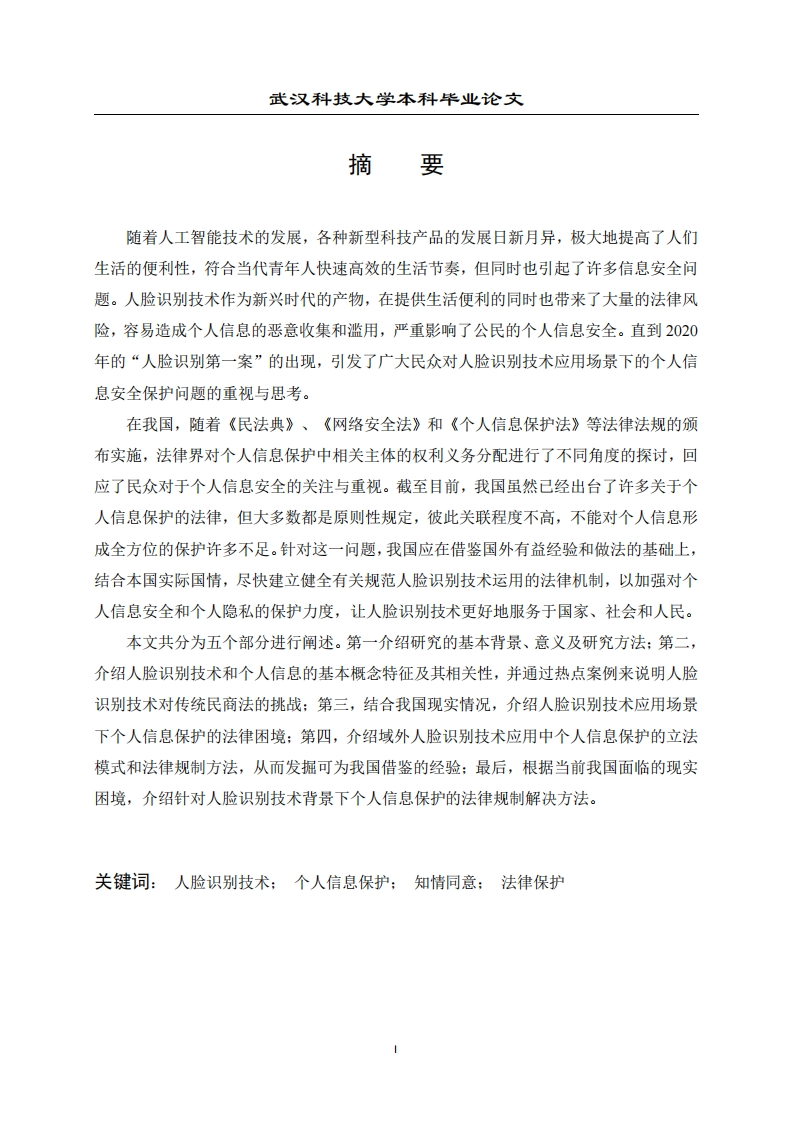
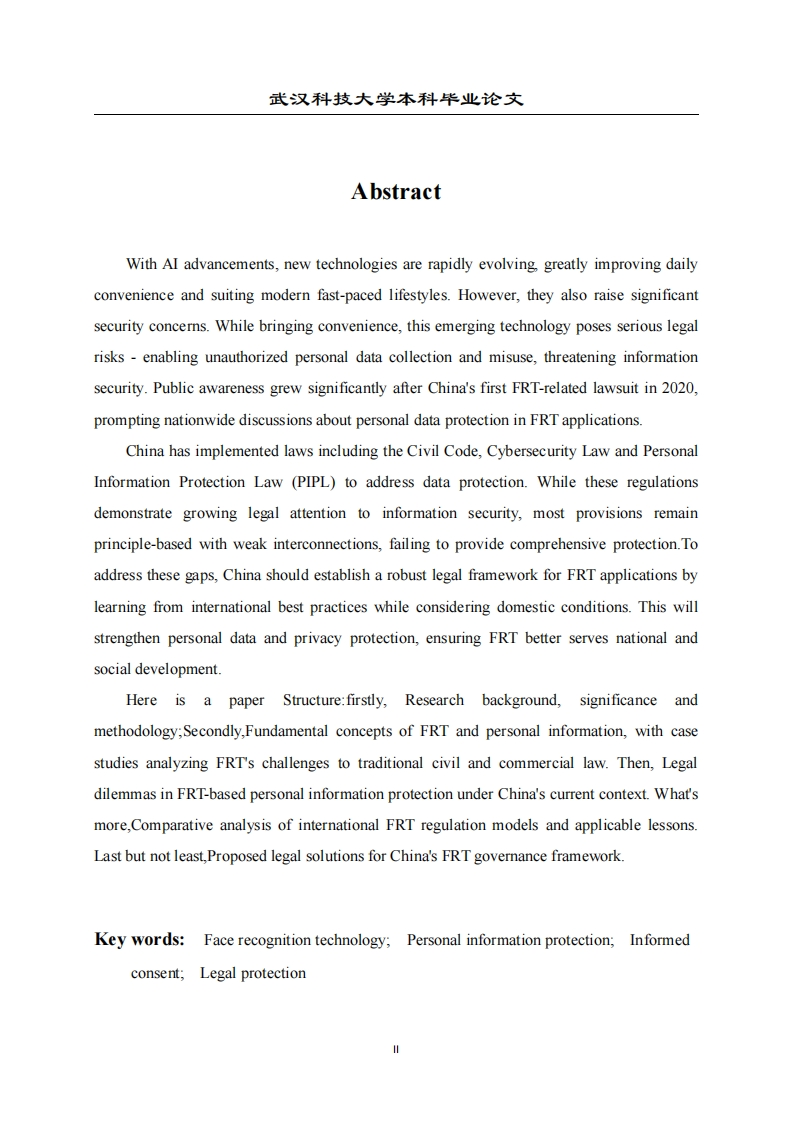
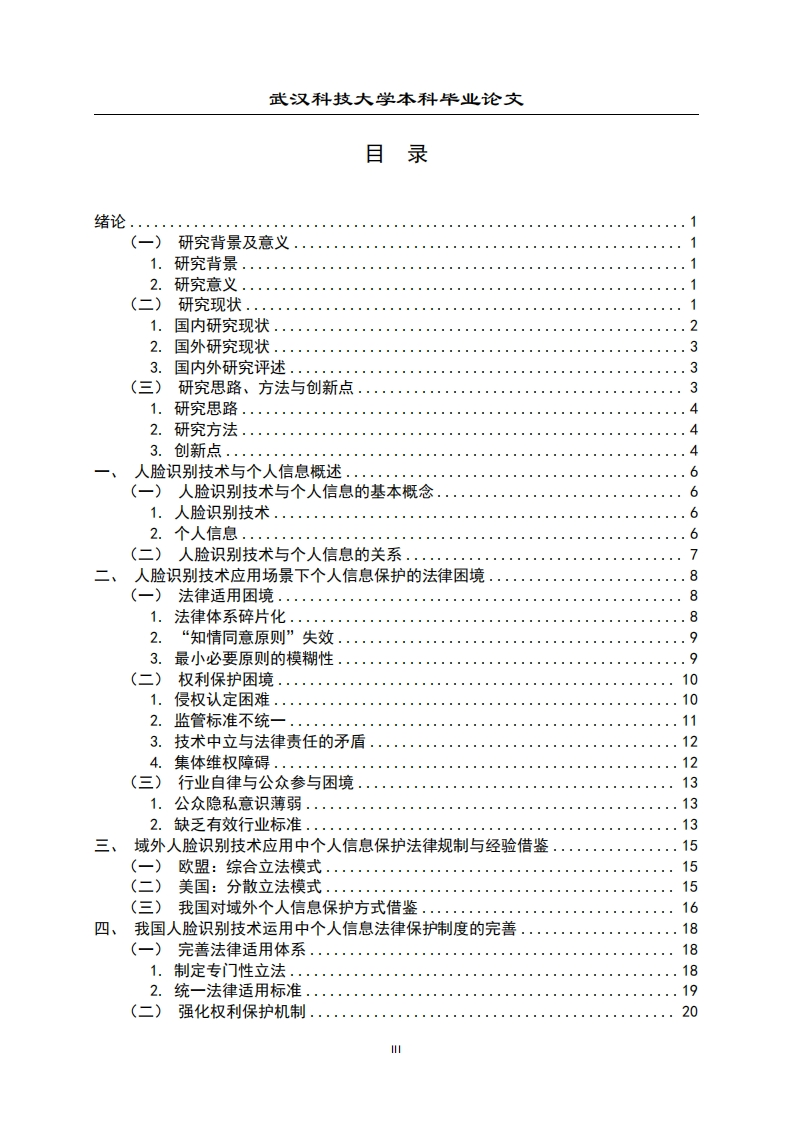
武汉科技大学本科华业论文摘要随着人工智能技术的发展,各种新型科技产品的发展日新月异,极大地提高了人们生活的便利性,符合当代青年人快速高效的生活节奏,但同时也引起了许多信息安全问题。人脸识别技术作为新兴时代的产物,在提供生活便利的同时也带来了大量的法律风险,容易造成个人信息的恶意收集和滥用,严重影响了公民的个人信息安全。直到2020年的“人脸识别第一案”的出现,引发了广大民众对人脸识别技术应用场景下的个人信息安全保护问题的重视与思考。在我国,随着《民法典》、《网络安全法》和《个人信息保护法》等法律法规的颁布实施,法律界对个人信息保护中相关主体的权利义务分配进行了不同角度的探讨,回应了民众对于个人信息安全的关注与重视。截至目前,我国虽然已经出台了许多关于个人信息保护的法律,但大多数都是原则性规定,彼此关联程度不高,不能对个人信息形成全方位的保护许多不足。针对这一问题,我国应在借鉴国外有益经验和做法的基础上,结合本国实际国情,尽快建立健全有关规范人脸识别技术运用的法律机制,以加强对个人信息安全和个人隐私的保护力度,让人脸识别技术更好地服务于国家、社会和人民。本文共分为五个部分进行阐述。第一介绍研究的基本背景、意义及研究方法:第二,介绍人脸识别技术和个人信息的基本概念特征及其相关性,并通过热点案例来说明人脸识别技术对传统民商法的挑战:第三,结合我国现实情况,介绍人脸识别技术应用场景下个人信息保护的法律困境:第四,介绍域外人脸识别技术应用中个人信息保护的立法模式和法律规制方法,从而发掘可为我国借鉴的经验:最后,根据当前我国面临的现实困境,介绍针对人脸识别技术背景下个人信息保护的法律规制解决方法。关键词:人脸识别技术:个人信息保护:知情同意:法律保护武汉科技大学本科华业论文AbstractWith AI advancements,new technologies are rapidly evolving,greatly improving dailyconvenience and suiting modern fast-paced lifestyles.However,they also raise significantsecurity concerns.While bringing convenience,this emerging technology poses serious legalrisks-enabling unauthorized personal data collection and misuse,threatening informationsecurity.Public awareness grew significantly after China's first FRT-related lawsuit in 2020,prompting nationwide discussions about personal data protection in FRT applications.China has implemented laws including the Civil Code,Cybersecurity Law and PersonalInformation Protection Law (PIPL)to address data protection.While these regulationsdemonstrate growing legal attention to information security,most provisions remainprinciple-based with weak interconnections,failing to provide comprehensive protection.Toaddress these gaps,China should establish a robust legal framework for FRT applications bylearning from international best practices while considering domestic conditions.This willstrengthen personal data and privacy protection,ensuring FRT better serves national andsocial development.Here is a paper Structure:firstly,Research background,significance andmethodology;Secondly,Fundamental concepts of FRT and personal information,with casestudies analyzing FRTs challenges to traditional civil and commercial law.Then,Legaldilemmas in FRT-based personal information protection under China's current context.What'smore,Comparative analysis of international FRT regulation models and applicable lessons.Last but not least,Proposed legal solutions for China's FRT governance framework.Key words:Face recognition technology;Personal information protection;Informedconsent;Legal protection武汉科技大学本科毕业论文目录绪论.(一)研究背景及意义…11.研究背景.…………2.研究意义……….1(二)研究现状1.国内研究现状2.国外研究现状.…….33.国内外研究评述.3(三)研究思路、方法与创新点31.研究思路………….42.研究方法………………3.创新点…………人脸识别技术与个人信息概述…6(一)人脸识别技术与个人信息的基本概念................61.人脸识别技术.......62.个人后息......................6(二)人脸识别技术与个人信息的关系......7二、人脸识别技术应用场景下个人信息保护的法律困境(一)法律适用困境.…81.法律体系碎片化.…..82.“知情同意原则”失效..…….93.最小必要原则的模糊性..9(二)权利保护困境101.侵权认定困难..................102.监管标准不统一…………….113.技术中立与法律责任的矛盾...........124.集体维权障碍.……….12(三)行业自律与公众参与困境...…131.公众隐私意识薄弱.……….132.缺乏有效行业标准............13三、域外人脸
喜欢就支持一下吧
点赞0 分享
相关推荐
评论 抢沙发
头像
欢迎您留下宝贵的见解!
提交
头像

昵称

取消
昵称表情代码图片

    暂无评论内容