《红楼梦》中林黛玉形象研究——从植物意象视角

第1页 / 共18页

第2页 / 共18页

第3页 / 共18页

第4页 / 共18页

第5页 / 共18页

第6页 / 共18页

第7页 / 共18页
试读已结束,还剩11页,您可下载完整版后进行离线阅读
《红楼梦》中林黛玉形象研究——从植物意象视角-知知文库网
《红楼梦》中林黛玉形象研究——从植物意象视角
此内容为付费资源,请付费后查看
1120
立即购买
您当前未登录!建议登陆后购买,可保存购买订单
付费资源
© 版权声明
THE END
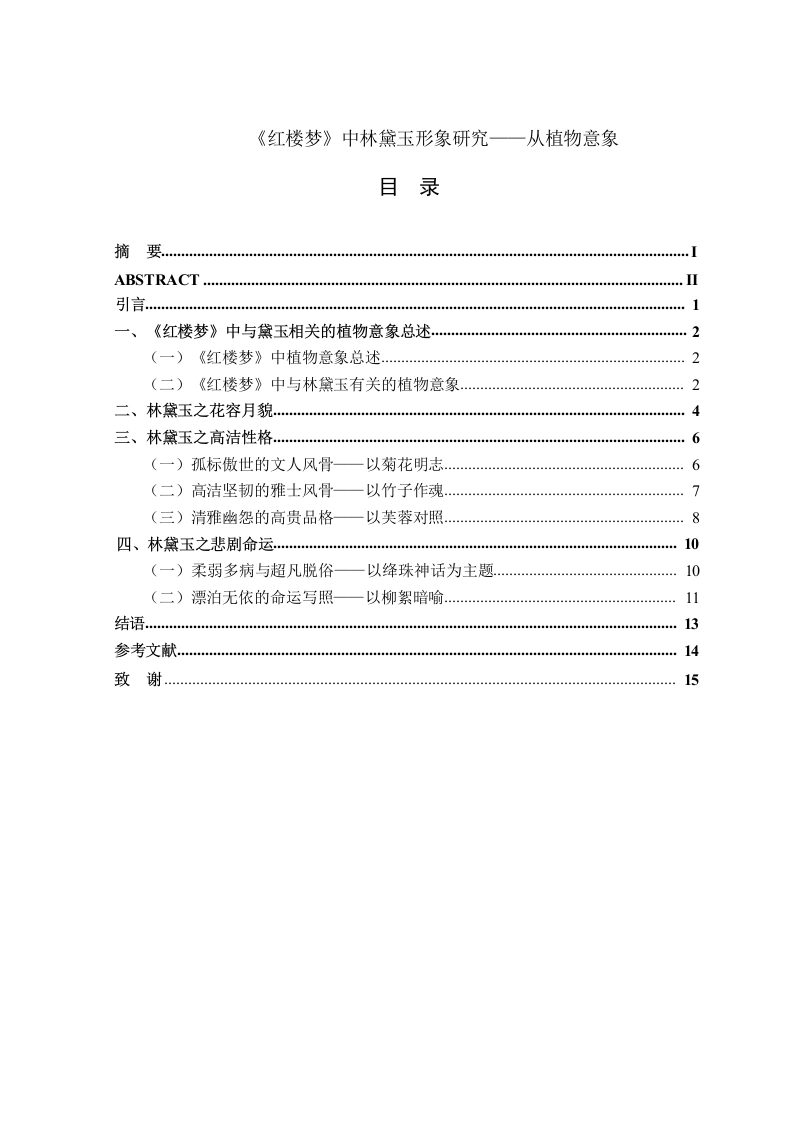
《红楼梦》中林黛玉形象研究一从植物意象目录摘要ABSTRACT…引言……1一、《红楼梦》中与黛玉相关的植物意象总述……2(一)《红楼梦》中植物意象总述.(二)《红楼梦》中与林黛玉有关的植物意象2二、林黛玉之花容月貌…4三、林黛玉之高洁性格.……6(一)孤标傲世的文人风骨一以菊花明志…6(二)高洁坚韧的雅士风骨一以竹子作魂…7(三)清雅幽怨的高贵品格一以芙蓉对照8四、林黛玉之悲刷命运…10(一)柔弱多病与超凡脱俗一以绛珠神话为主题10(二)漂泊无依的命运写照一以柳絮暗喻1113结语.…参考文献14致谢.15摘要《红楼梦》中林黛玉形象研究一直是红学领域的重要议题,本文从植物意象视角切入,解析曹雪芹如何以“比德”手法建构林黛玉的性格与命运隐喻。论文以文本细读为基础,结合中国传统“比德文化”,梳理与黛玉相关的六大植物意象体系:桃花以“艳绝桃花”的外貌刻画与《葬花吟》的命运书写,既展现其明媚姿容,又暗喻红颜薄命的悲剧底色;菊花通过《咏菊》等诗作,以“孤标傲世”的文人风骨映射其高洁品格与才情:竹子以潇湘馆“凤尾森森”的环境描写,象征其坚韧不屈、不媚世俗的雅士精神:芙蓉则借花签“风露清愁”与《芙蓉女儿诔》,构建其清雅幽怨、出尘脱俗的气质:绛珠草作为神话原型,以“还泪”母题奠定其体弱情痴、超凡脱俗的宿命基调;柳絮通过《唐多令》的“飘泊亦如人命薄”,喻示其寄人篱下、命运无常的漂泊感。这些植物意象不仅是自然景物描写,更是曹雪芹“比德”手法的创新实践,构建起人物性格与命运的隐喻体系,使林黛玉集灵秀、孤高、悲情于一体,展现了《红楼梦》在人物塑造与文化传承上的高度。关键词:《红楼梦》;林黛玉:植物意象;人物形象ABSTRACTThe study of Lin Daiyu's image in Dream of the Red Chamber has always been animportant topic in the field of Redology.This paper analyzes from the perspective ofplantimagery how Cao Xuegin constructs the three-dimensional image of Lin Daiyu throughmultiple plant symbols,and reveals the cultural metaphor of her character traits and fatetrajectory.The paper is based on close reading of the text and combines traditional Chinese"Bide Culture"to outline six major plant imagery systems related to Daiyu:Peachblossoms,through their portrayal as "the most beautiful peach blossoms"and the fatedescribed in "Elegy for Flowers,"not only showcase their radiant beauty but also subtlyhint at the tragic undercurrent of fleeting youth;Chrysanthemums,reflected through poemslike "Praising Chrysanthemums,"embody the noble character and talent of literati withtheir "unconventional pride";Bamboo,depicted in the Xiangxiang Pavilion with its "densephoenix tails,"symbolizes the spirit of a refined scholar who is resilient and unyielding,refusing to conform to convention;Hibiscus,through the flower tag "frost and dewsorrow"and "Eulogy for the Lotus Maiden,"constructs an image of elegance,melancholy,and transcendence;The Crimson Pearl Grass,as a mythological prototype,sets the tone forits frail and passionate nature,transcending the mundane with the theme of "returningtears";Willow catkins,through the line "wandering like a thin life"from "Tangduoling,"metaphorically convey the sense ofbeing dependent on others and facing an unpredictablefate.These plant images are not only the description of natural scenery,but also theinnovative practice of Cao Xueqin's "comparing virtue"technique,which constructs ametaphorical system of characters'personality and fate,making Lin Daiyu a combinationof spiritual beauty,loneliness and sadness,showing the high degree of character shapingand cultural inheritance in Dream of the Red Chamber.KEYWORDS "Dream of the Red Chamber";Lin Daiyu;plant imagery;characterimage引言《红楼梦》面自诞生以来广受世人青睐,清代便流传“开谈不说《红楼梦》,读尽诗书是枉然”四的谚语,而今更形成蔚为大观的“红学”研究体系。研究者灿若繁星,研究著述汗牛充栋,业余爱好者更是不可胜数,广受青睐的一个重要缘由就在于它对中华传统文化的精妙传承与创新演绎。林黛玉形象研究伴随着《红楼梦》而诞生。20世纪的前50年,研究者大都把林黛玉看作现实生活中的人物,对这一形象主要进行的是道德评价和判断。俞平伯先生在1923年刊行的《红楼梦辨》圆中,提出了“钗黛合一”的概念,对林黛玉的评价也不再局限于伦理判断。20世纪50至70年代,研究者们对林黛玉的评论大都着眼于该形象的品格、
喜欢就支持一下吧
点赞0 分享
相关推荐
评论 抢沙发
头像
欢迎您留下宝贵的见解!
提交
头像

昵称

取消
昵称表情代码图片

    暂无评论内容