


文档主要内容
文档类型:论文
适用人群:文学研究者、高校中文系学生、沈从文作品爱好者、乡土文学方向学习者
文档核心内容:
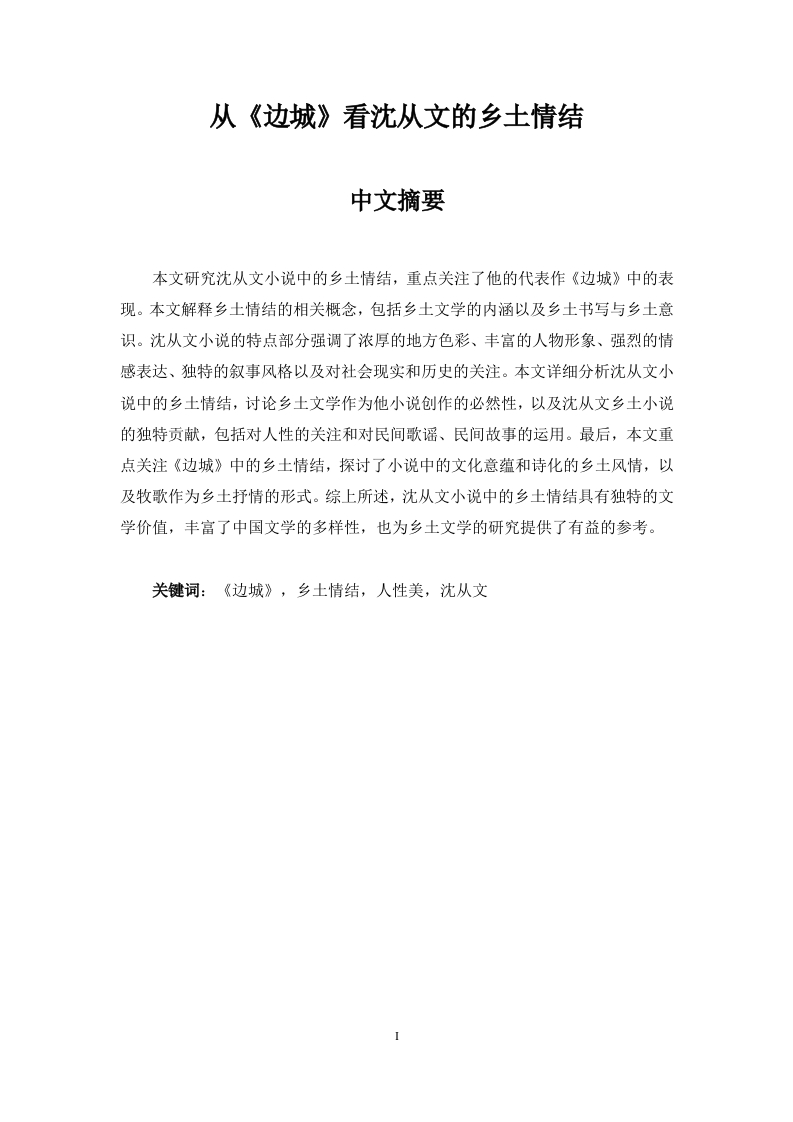
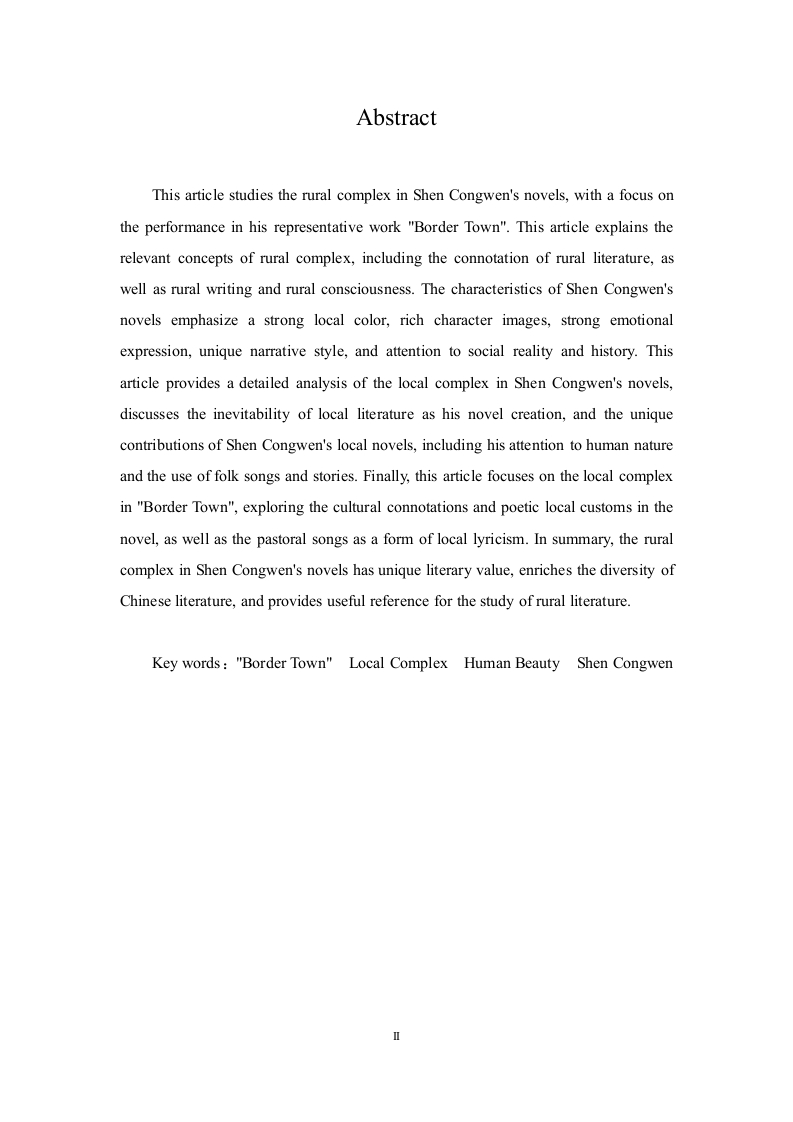
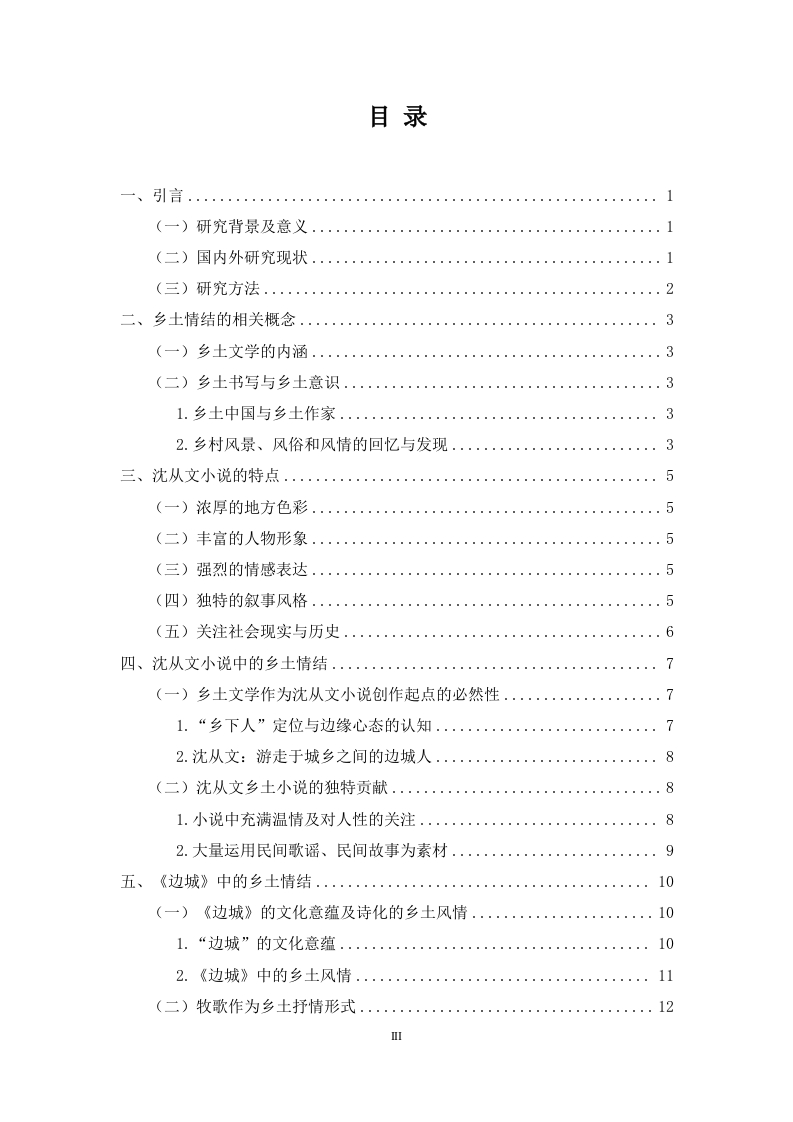
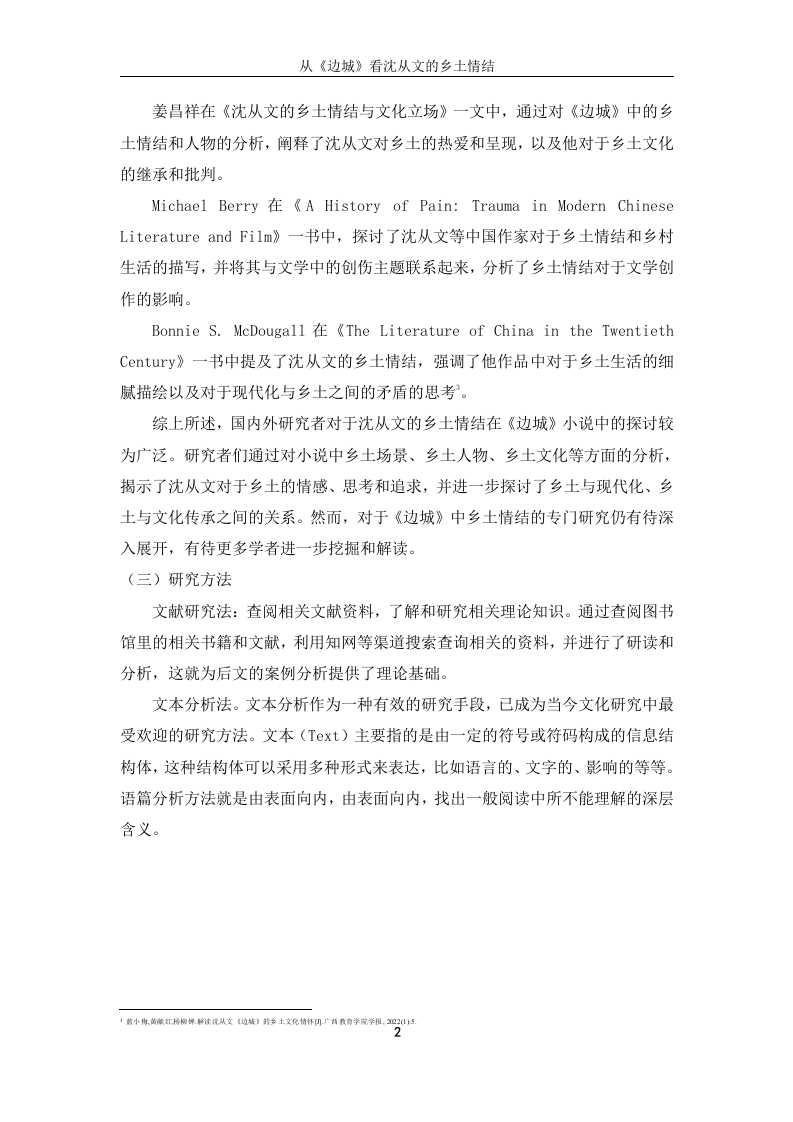
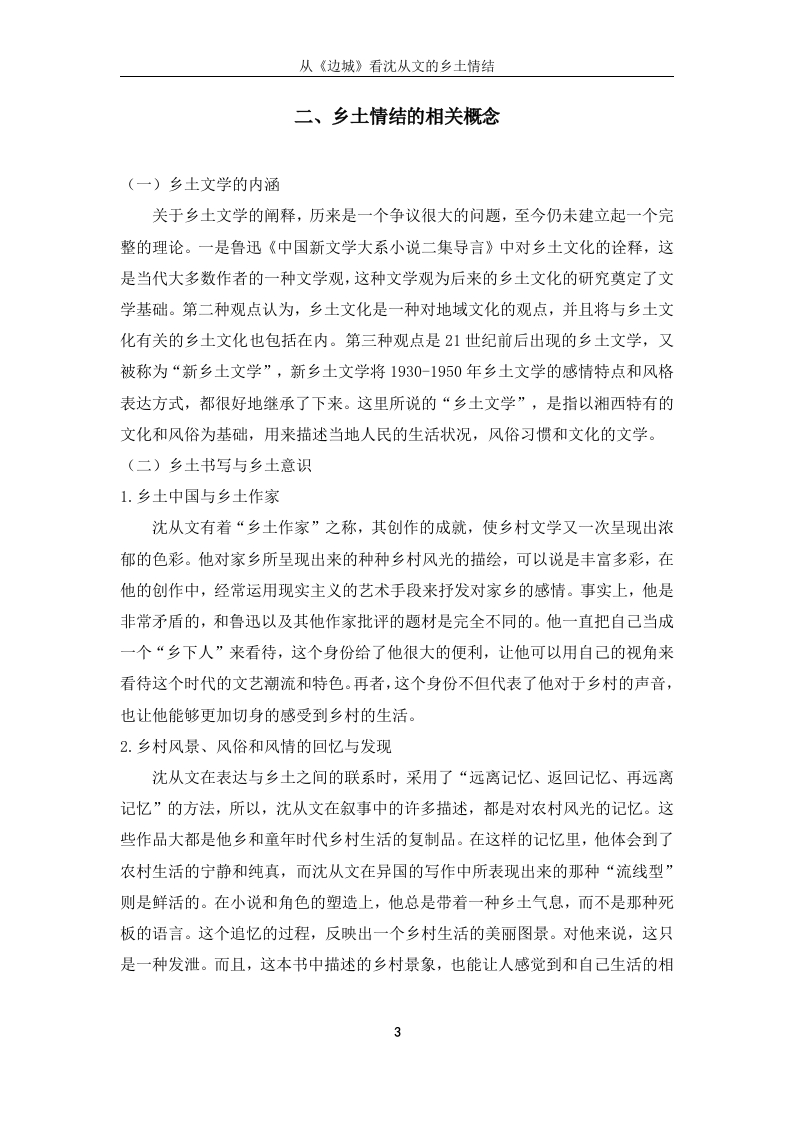
该论文系统研究了沈从文小说中的乡土情结,以其代表作《边城》为核心分析对象。论文首先阐释了乡土文学的内涵、乡土书写与乡土意识等概念,随后归纳了沈从文小说的五大特点:浓厚的地方色彩、丰富的人物形象、强烈的情感表达、独特的叙事风格以及对现实与历史的关注。在此基础上,论文深入探讨了乡土情结在沈从文创作中的必然性——源于其“乡下人”定位与城乡之间的边缘心态,并总结了其乡土小说的独特贡献:对人性的温情关注以及对民间歌谣、民间故事的大量运用。最后,论文聚焦《边城》,分析了其中“边城”的文化意蕴、诗化的乡土风情以及牧歌作为乡土抒情的形式。
可解决的实际问题:
帮助读者快速理解沈从文乡土情结的内涵、形成原因及文学表现,掌握《边城》中文化意蕴与抒情手法的分析框架,为撰写相关学术论文或文学评论提供参考。
正文内容:
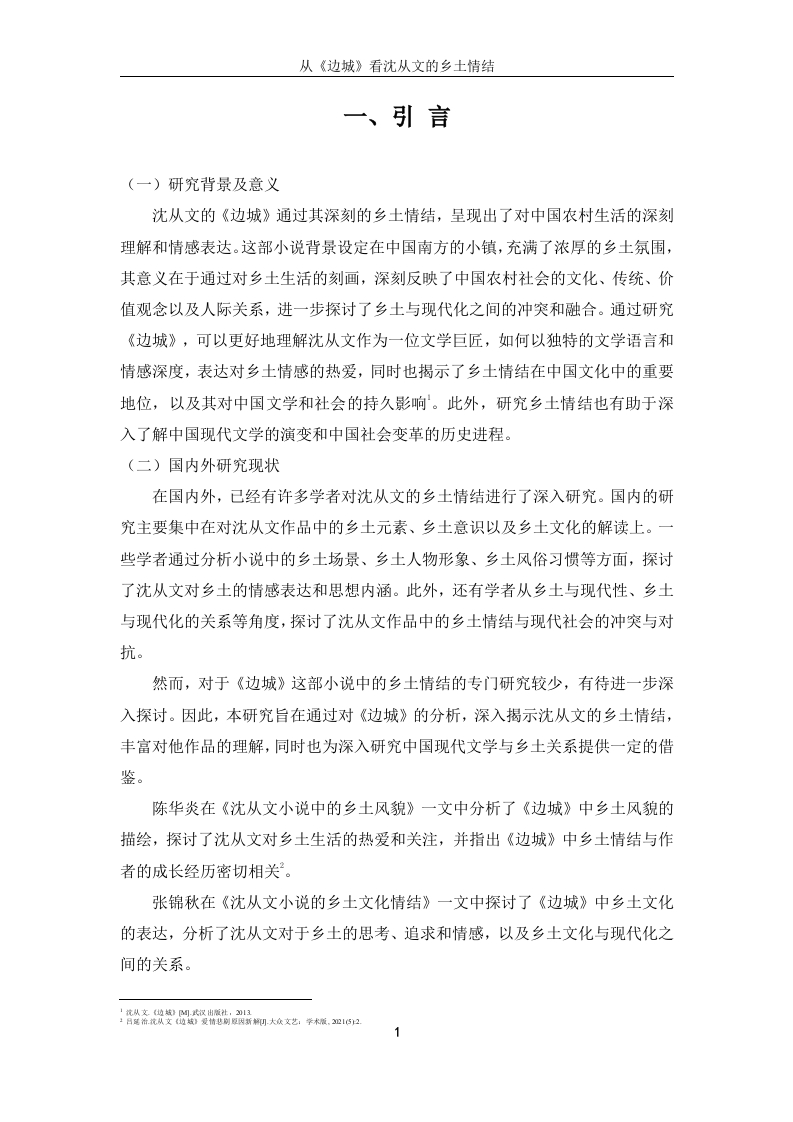
沈从文是中国现代文学史上极具特色的乡土作家,其小说中的乡土情结贯穿创作始终。该论文从概念界定入手,指出乡土文学的核心在于对乡村风景、风俗、风情的书写,而乡土意识则体现为作家对乡村生活的自觉反思。沈从文的作品正是这种意识的典型代表,他笔下的湘西世界既充满地方色彩,又承载着深厚的情感与历史记忆。
论文进一步归纳了沈从文小说的五大特点。浓厚的地方色彩使作品具有鲜明的辨识度,丰富的人物形象如翠翠、老船夫等成为文学经典。强烈的情感表达与独特的叙事风格相互交织,形成一种诗意的抒情节奏。同时,沈从文并未回避社会现实与历史变迁,而是在乡土叙事中暗含对现代文明的批判。
关于乡土情结的必然性,论文指出沈从文始终以“乡下人”自居,这种边缘心态使他既无法完全融入城市,又对乡村怀有深切的眷恋。游走于城乡之间的身份,促使他将乡土文学作为创作的起点与归宿。其独特贡献体现在两个方面:一是小说中充满温情,始终关注人性中的善良与美好;二是大量吸收民间歌谣、民间故事作为素材,使作品具有浓郁的民间文化气息。
在《边城》的具体分析中,论文揭示了“边城”一词的双重文化意蕴:既指地理上的偏远小镇,也象征未被现代文明侵蚀的纯净世界。小说中的乡土风情被诗化处理,湘西的山水、渡船、端午赛龙舟等场景都成为抒情载体。而牧歌作为乡土抒情的主要形式,通过舒缓的节奏、自然意象的铺陈,营造出理想化的田园意境。
结论与建议:
该研究通过系统梳理沈从文乡土情结的理论基础、创作特点及《边城》的文本分析,得出核心结论:沈从文小说中的乡土情结具有独特的文学价值,不仅丰富了中国文学的多样性,也为乡土文学研究提供了有益的参考。建议读者在阅读《边城》时,重点关注其文化意蕴与牧歌手法,并结合沈从文的“乡下人”身份理解其创作动机。
文档评价:
论文结构完整,从概念到文本层层递进,逻辑清晰。对沈从文乡土情结的剖析深入,尤其对《边城》中诗化乡土风情与牧歌形式的解读具有启发性。适合作为学术入门或教学参考资料。
使用建议:
可直接用于文学课程论文的文献综述部分,或作为理解沈从文乡土文学思想的辅助材料。建议配合《边城》原著阅读,以加深对文中分析点的体会。

项目总承包管理组织方案-c9a0040014-docx-1.webp)


暂无评论内容