



📄文档内容总结
标准输出格式
主要内容:
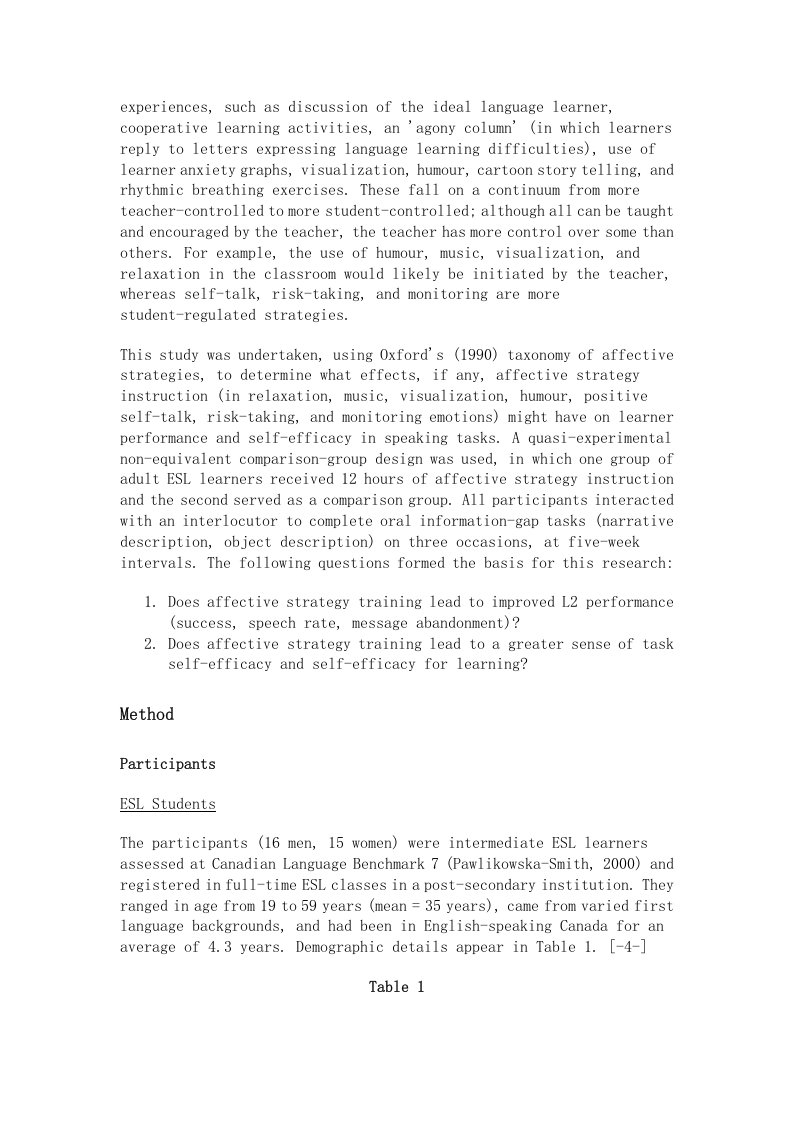
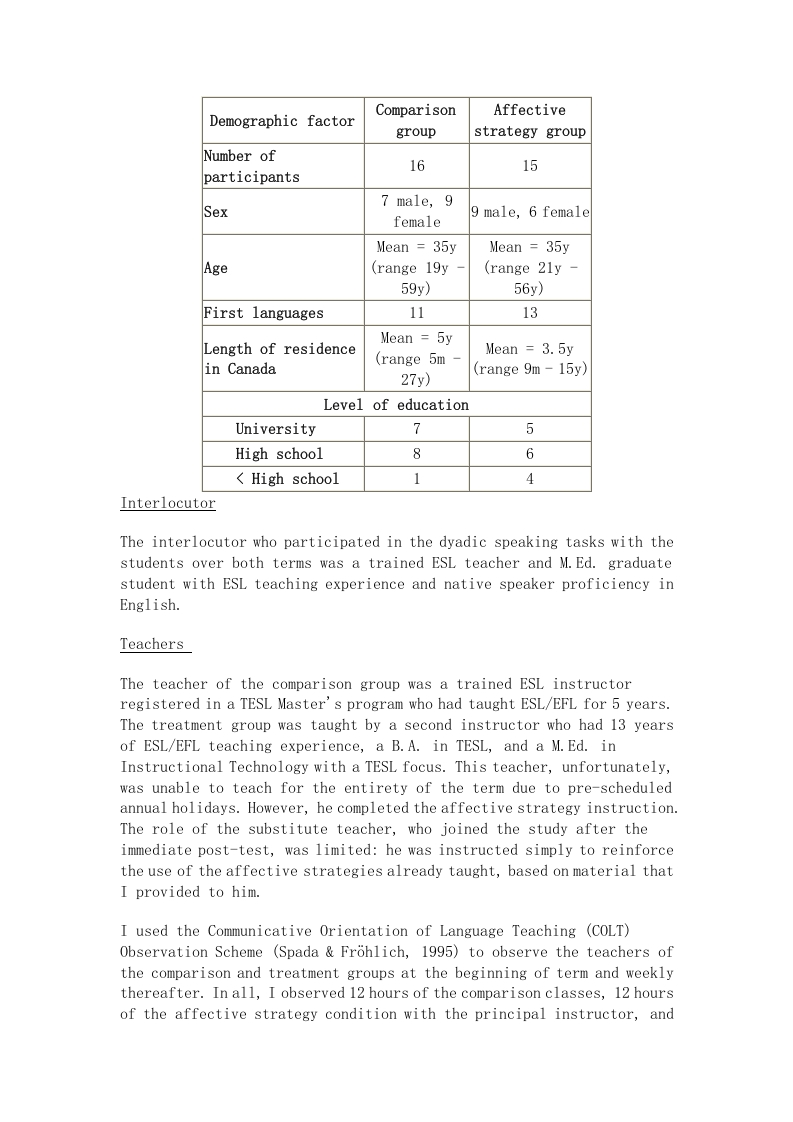
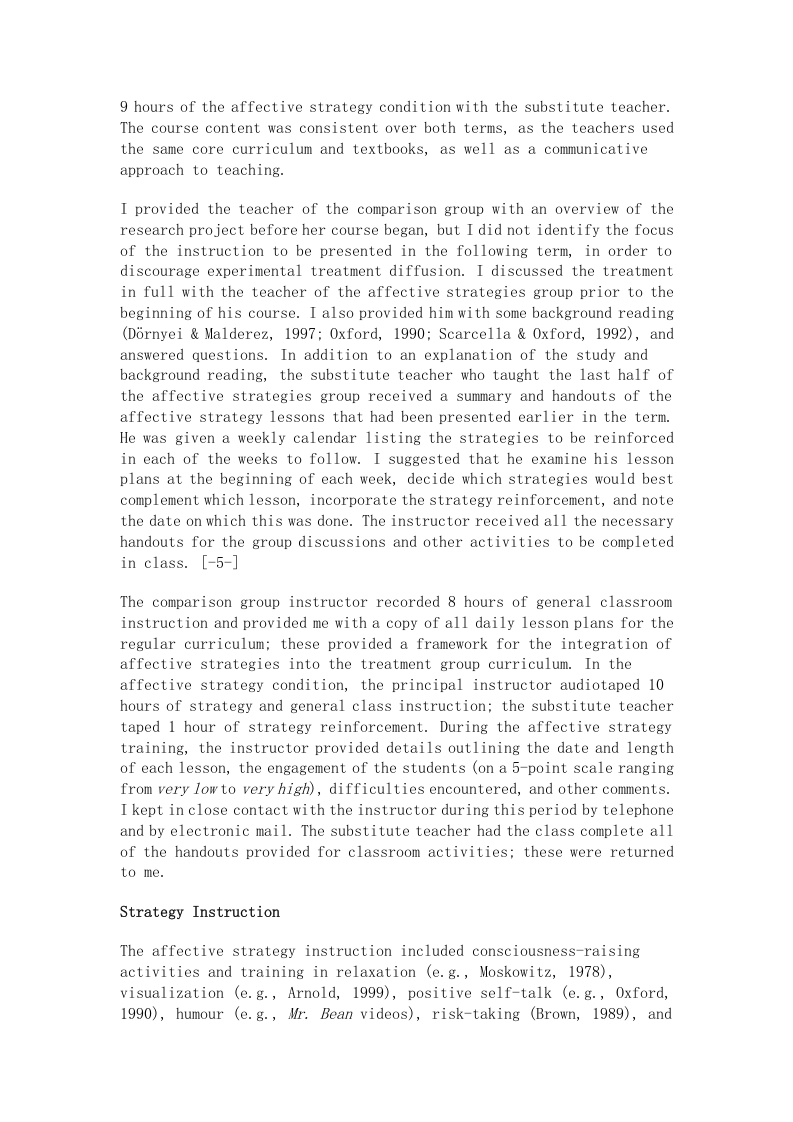
Affective strategy training in the ESL (English as a Second Language) classroom has been shown to significantly enhance students’ language learning outcomes. This training focuses on developing students’ emotional and motivational skills, which are crucial for effective language acquisition. Key components of such training include setting clear goals, fostering a positive learning environment, and encouraging self-regulation. Research indicates that students who participate in affective strategy training not only improve their language proficiency but also develop better study habits and self-confidence. Moreover, this approach helps in reducing anxiety and stress related to language learning, thereby creating a more conducive learning atmosphere.
The effectiveness of affective strategy training is supported by various studies, which highlight its positive impact on students’ overall academic performance and emotional well-being. For instance, one study found that students who received affective strategy training showed a 20% improvement in their language skills compared to those who did not receive such training. Another study emphasized the importance of teacher training in implementing effective affective strategies, suggesting that teachers play a critical role in creating a supportive learning environment.
文档类型:
技术指南
主要用途:
方案撰写参考、技能提升教程
核心价值:
1. 提供了系统性的策略和方法,帮助教师在ESL课堂中实施情感策略训练。
2. 强调了情感策略训练对学生语言学习和情感健康的双重积极影响。
3. 提供了实证研究支持,证明了情感策略训练的有效性。
适用人群:
ESL教师、教育工作者、语言学习者、教育研究者


暂无评论内容